


I’m delighted to see Amica Terra again riffing off of one of my posts.

The above is, in part, a rebuttal to my recent No One Promised Us Anything. There, I talked about why I can’t really accept the Torah as a sacred text. This is an extreme position, even by the standards of modern liberal Judaism. You can be, say, a reform or reconstructionist Jew who is atheist or agnostic, who rejects traditional halacha (e.g. eats pork), who spends more time writing new fan-fiction about Miriam than studying old stories about Moses. There are plenty of synagogues where you’ll be right at home. But as far as I know, all of those synagogues have a full Torah in the form of a handwritten scroll, which nobody is allowed to touch directly, and which plays a central ceremonial role. If you find that alienating (and I do), you’re going to have trouble doing anything resembling worship (and I do).1
Rationalizing evil may not be the path to moral progress
Amica Terra has a thoughtful reply to my kinda glib line about how if the Torah were a blog, anyone with modern sensibilities would stop reading it pretty quickly, as soon as they got to a superficially-evil verse like Deuteronomy 22:23-24. They write:
I think there are actually quite good reasons to indulge the Torah that don’t exist for any old blog on the internet.
These reasons are that the Torah is highly influential, probably the most-studied text in the world, and has its “moral highs,” such as “its insistence on fairness to the widow, orphan, and stranger.” All of these reasons are clearly correct, but for me, at least, they’re reasons to treat the Torah as an object of fascination, rather than necessarily worship. For Amica Terra, these are reasons to “dig,” to discover or create esoteric interpretations, to try to get to a point where every verse reads, to you, as aligned with your own morality. The necessity of this work is part of what makes the Torah a Great Book—it’s demanding, and rewards effort.
Setting out on that quest requires a leap of faith, and it’s one I’m too scared to make. On a surface reading, the Torah doesn’t seem like the kind of book that, according to my gut, makes you more moral when you study it this way. I won’t know for sure unless I try, but what if that’s a trap?
What would it look like if, for example, the Devil wrote a text designed to corrupt people? (I was going to specify the modern Christian theology version of the Devil, but I think the traditional Satan works well here too). If he did a good job writing and promoting it, that text would end up influential, highly studied, and appear moral enough that its adherents wouldn’t be ostracized. Good people could study it, and find ways to reconcile the “problematic” bits, until it all read as moral to them. And, in the process, they’d unwittingly become just a little bit worse as people. Or maybe they’d even become better as people, but worse as moral philosophers, and thereby corrupt the community.
I don’t literally believe (pace Leonard Cohen) that Satan wrote the Bible. But as someone who venerates progress, who holds as sacred the expanding moral circle, I am almost as wary of texts written by ancient people as of texts by the evil urge incarnate. The authors of the Torah lacked the benefit of thousands of years of civilization. If what they wrote wasn’t as evil as, at minimum, Homer, it would indeed be a miracle. If there was no miracle, if these were just ordinary people trying their best, then surely the ancient evils in our soul are mirrored in the text, ready to encourage our ugliest instincts.
Look at who we turn into when we do apologetics. Amica Terra writes:
This is a story of a people who could do great things, great works of justice and righteousness, but are being taken from the good path towards perverse pleasures and mistaken values. Although the [bad ethnicity] did not deprive the [good ethnicity] materially, they conspired to corrupt their souls.
This is also my reading of the text. We’re supposed to see this narrative as some kind of justification for genocide—it was self defense! They were being all foreign at us! And, indeed, if you see someone write a passage like this, they are usually either defending the Bible or calling for mass murder.2 The story is having its intended effect.
I don’t think this gets better when you put in more work. I think it typically gets worse. Browsing through various online discussions of Numbers 31, I mainly see apologists explaining that the Midianite culture was so bad that it needed to be annihilated, and/or that the women needed to die because they were all evil, and their sons needed to die because they would grow up to avenge their mothers.3 It’s common to throw in a claim that the Midianites were practicing child sacrifice, which is an odd way to try to justify infanticide.
The Torah is not what a time traveler would’ve written
Amica Terra also makes what I think is a standard argument: that in the context of when it was written, and surrounding verses, the law about executing rape victims was actually working to prevent honor killings. As a refresher, this is how it appears:
If a man happens to meet in a town a virgin pledged to be married and he sleeps with her, you shall take both of them to the gate of that town and stone them to death—the young woman because she was in a town and did not scream for help, and the man because he violated another man’s wife. You must purge the evil from among you.
-Deuteronomy 22:23-24, New International Version
But, Amica Terra notes, the very next verse talks about how that law does not apply when the alleged rape happens outside of town.
In this context, I think the better interpretation of the rule of the city is not quite that we presume a woman guilty of a capital crime, but that we create a bright line rule of presumption. This rule arguably protects women from being killed because they were raped by providing for an extremely clear line of responsibility: they must cry for help (query as to whether, lacking such a bright rule, we think judges of the time would be more likely to give a woman the benefit of the doubt or condemn her to death).
Most modern Torah commentary makes this sort of case: the Torah was appropriate for its horrific time. It was ameliorating the horror as much as possible. Trying to jump right to a perfect morality wouldn’t have worked.
This doesn’t work for me because it just seems like if the Torah was trying to do harm minimization, it wasn’t doing a great job. If Deuteronomy 22:23-29 was written to protect women, surely there was a better way to start than by commanding that some women be stoned to death. If it was written to give rights to rape victims, it’s odd to, at no point, empower the victim to make any sort of choice. (What if she doesn’t want to marry her rapist?) Are we really meant to believe that ancient Judea would’ve thrown the book away in disgust if it had been even a little bit better here? Say, keep it exactly the same, but add a bit at the end saying that if a victim doesn’t want to marry her rapist, she can either demand lifelong financial support from him or marry someone else. I hope that’s de facto what happened, so why not make it the plain law?
I realize I’m being about as arrogant as humanly possible here, but I can’t help but feel like if I were omniscient, I could’ve done a better job writing the Torah. There are laws about treating slaves well and not returning fugitives to their masters, but wouldn’t it have been nice if it had also explicitly condemned slavery? Even once? Even if it couldn’t have done any good at the time, it still seems worth it for the sake of eventually making modern abolitionism a little easier. What would’ve gone wrong if there was a passage like this?
And the Lord told Moses that for him, and for the children of Israel unto ten generations, slavery would be hunky-dory, but after ten generations it would be an abomination.
Yea, sayeth the Lord, as long as you, Moses, adhere to all of the laws about ethical treatment of slaves, you’re good.
But your people’s distant descendants may not own slaves. They may not profit from the work of slaves. They may not live in a place that permits slavery for more than seven years. At the end of the seventh year, they must say “I am leaving, for I will have no part of this evil thing.”
Also, I might have cut all the stuff encouraging people to massacre civilians. Just a thought.
The Torah is not simply a product of its time
I don’t think the people who wrote the Torah were the most virtuous people around.
Take Homer, yet again. Homer’s works are slightly older than the written Torah—it was just starting to be written, historians think, when Homer lived. Homer is definitely a vessel for many of the same evils of the time—in the Odyssey, all the slaves who slept with Odysseus’s enemies, presumably under duress, are massacred. Odysseus and Telemachus torture them to death, and the narrative seems to be fine with that.
But is Homer as bad as the Torah? No.
A signature element of Homer’s work is that he displays empathy for everyone involved. The slave women in that scene die, per Homer, οἴκτιστα, meaning “pitiably.” The fall of Troy is the will of Zeus, but it’s also a great tragedy. One of the last scenes in the Iliad is Achilles and Priam, the king of Troy, holding each other and crying over their shared grief. During the battle scenes in the Iliad, Homer occasionally stops the action to deliver the sympathetic backstory of a seemingly random soldier right before he dies.
The Torah isn’t quite the same genre as the Iliad, of course. It rarely tries to be vivid. Details are sparse. But even in the Torah’s idiom, we could’ve had a version of Homer’s empathy, and we don’t. One of the people killed in Numbers 31 is the wizard Balaam, who’s been a viewpoint character before. Here, though, he just casually shows up in a list of the dead. We’re not meant to think about his death from his point of view.
Moses is human. He’s described as “angry” in Numbers 31. He could’ve been sad, too. He could’ve said “Do I really have to kill the people who saved my life? My firstborn son is a Midianite! My most trustworthy advisor is a Midianite! My wife—” But he doesn’t, because we’re not supposed to feel complicated about any of this.
The Torah didn’t need to be this way
Amica Terra doesn’t make this argument, but a hypothetical modern time traveler might think something like “Well, I unfortunately need to include a little genocide or else the more-ethical culture I’m trying to create won’t win.” That’s probably mostly wrong, as we can see from other religions developing around the same time. The clearest point of comparison is the texts that became the Mahabharata, something analogous to the Tanakh for Hinduism. Like the Torah, the Mahabharata is partly a story, partly a code of laws. Like the Torah, it depicts warfare and endorses violence under certain circumstances. Unlike the Torah, though, those circumstances do not include killing the innocent or the helpless.4
Bhīṣma said: “A ruler who bears responsibility for the world should never desire to conquer the earth by unrighteous means. For if one gains victory through adharma, what king could truly be regarded as honorable or worthy of esteem? A victory joined with adharma is unstable and brings no true gain; it is also unheavenly, leading one away from higher worlds. O bull among the Bharatas, such a victory ruins the king and brings the realm itself to collapse.
One should not strike down an opposing warrior after taking him captive—if his armor has been shattered, if he is declaring ‘I am yours,’ if he stands with joined palms in surrender, or if he has laid down his weapons. Warfare must remain governed by dharma: once an enemy is disarmed or has sought protection, violence against him becomes unlawful.
O Yudhishthira, when a king has been overcome by superior force, he should not continue to fight that victor. Instead, he should live for a year in disciplined restraint and conciliation; from that self-control he is, as it were, born anew—restored in strength and fitness to act.
A king should never again wage war against one who has already been overcome by force. He should take him captive and, for a full year, train him to live in a loyal and agreeable manner; then it is as though the defeated man is born anew. He becomes like a son to the victorious king—therefore, after a year he should be released. Likewise, a maiden seized by prowess should not be questioned for a year; after that, if on being asked she wishes to choose another, she should be returned. The same principle applies to all wealth and other property taken suddenly or by deceit: after a year it should be restored to its rightful owner.”
- Mahabharata (Gita Press), Shanti Parva, Adhyaya 97 (emphasis mine)
Over a billion people today treat this as a sacred text. You can promote mercy and still have your culture “win.” (Also, look! Women having the right to choose something! It can be done!)
The Torah is not redeemed by the good bits
The Midianite genocide is the last major act required of Moses before he’s allowed to die. This bookends Moses’s life in a curious way.
When he’s born in Egypt, the Pharaoh has ordered all midwives to kill any male Hebrew babies at birth. The midwives do not, in fact, do this, because they’re midwives. Eventually the Pharaoh notices that his policies are not effecting the demographic change he was targeting.
Then the king of Egypt summoned the midwives and asked them, “Why have you done this? Why have you let the boys live?” — Exodus 1:18, NIV
The midwives lie and say that Hebrew women give birth faster than Egyptian women so they haven’t been getting there in time. The Pharaoh accepts this and changes tactics slightly:
Then Pharaoh gave this order to all his people: “Every Hebrew boy that is born you must throw into the Nile, but let every girl live.” — Exodus 1:22, NIV
That’s where we are when Moses is born. Right before he dies, we find him echoing these lines:
“Have you allowed all the women to live?” he asked them. — Numbers 31:15, NIV
The Hebrew here is similar to the Hebrew in Pharaoh’s demand to the midwives, just with the gender changed. And, like the Pharaoh, Moses then issues a more comprehensive follow-up order.
“Now kill all the boys. And kill every woman who has slept with a man, but save for yourselves every girl who has never slept with a man.” — Numbers 31:17-18
After 120 years, Moses has lived long enough to become the villain.
If we find light in the Torah, it’s only the light we bring to it. The Torah is not against genocide and slavery, it’s against those things happening to Jews (unless we blaspheme too much, then we deserve it.) We celebrate the midwives who defied the Pharaoh in order to save babies, and don’t celebrate it when the twelve tribes of Israel come together as one to kill a whole bunch of babies. Those choices aren’t us finding goodness in the text. We’re taking the morality we already have, and imposing it on a text with a very different sensibility.
To me, passages like the Ten Commandments aren’t worthy of reverence, even when they seem like they could be gesturing at principles I hold sacred. They’re desecrations. “Thou shalt not kill” is presented without immediate commentary. We can only understand its meaning by reference to the surrounding laws and surrounding narrative. Ten verses later, we’re commanded to sacrifice animals. Two chapters later, in Exodus 22:20, we’re commanded to kill anyone who sacrifices to any other god. The commandment isn’t being put on a pedestal, it’s being hollowed out.
I would like to think that at some point, there was a version of the Torah I could’ve loved. Exodus 22:21, the verse after the “kill all blasphemers” one, is lovely: “Do not mistreat or oppress a foreigner, for you were foreigners in Egypt.” It was probably different writers, much later, who added in Numbers 25:6-15: “And then a foreigner named Kozbi showed up in camp with an Israelite lover, so Phinehas son of Eleazar immediately stabbed them both to death, no questions asked. ‘Good job,’ said the Lord.”
That cruelty was put in there to own the libs, to ruin the book for people like me. For me, it succeeded.
Nevertheless, owls
I do need to correct the record on one pedantic point. When I wrote about Job being “a brother to dragons and a companion to owls,” I wasn’t clear. Amica Terra read that as a description of Job in his former glory. But, in the text, it’s actually part of the “after” picture, not the “before” picture. Throughout the Bible, hanging out with owls means you’ve hit rock bottom. They’re loathsome, not wise. They eat carrion. Job has been demoted from companion to rich men to an outcast among the scavenging desert birds.
(Obviously it’s hard to read “brother to dragons” as anything other than awesome, which is why pretty much every non-KJV translation substitutes for “dragons” something less cool like “jackals,” the owls of the dog world.)
I’m far from the first to find what Ilana Pardes calls “Countertraditions in the Bible” in its treatment of birds of prey. The Lilith Fair was an indirect example. The Hebrew word lilith is usually translated as referring to a species of owl, but in midrash Lilith becomes Adam’s first wife, who turned to evil and became a monster.
That particular species of owl is also the symbol of Athena. The scientific name of one of its subspecies is Athene noctua lilith. It’s kind of cute.
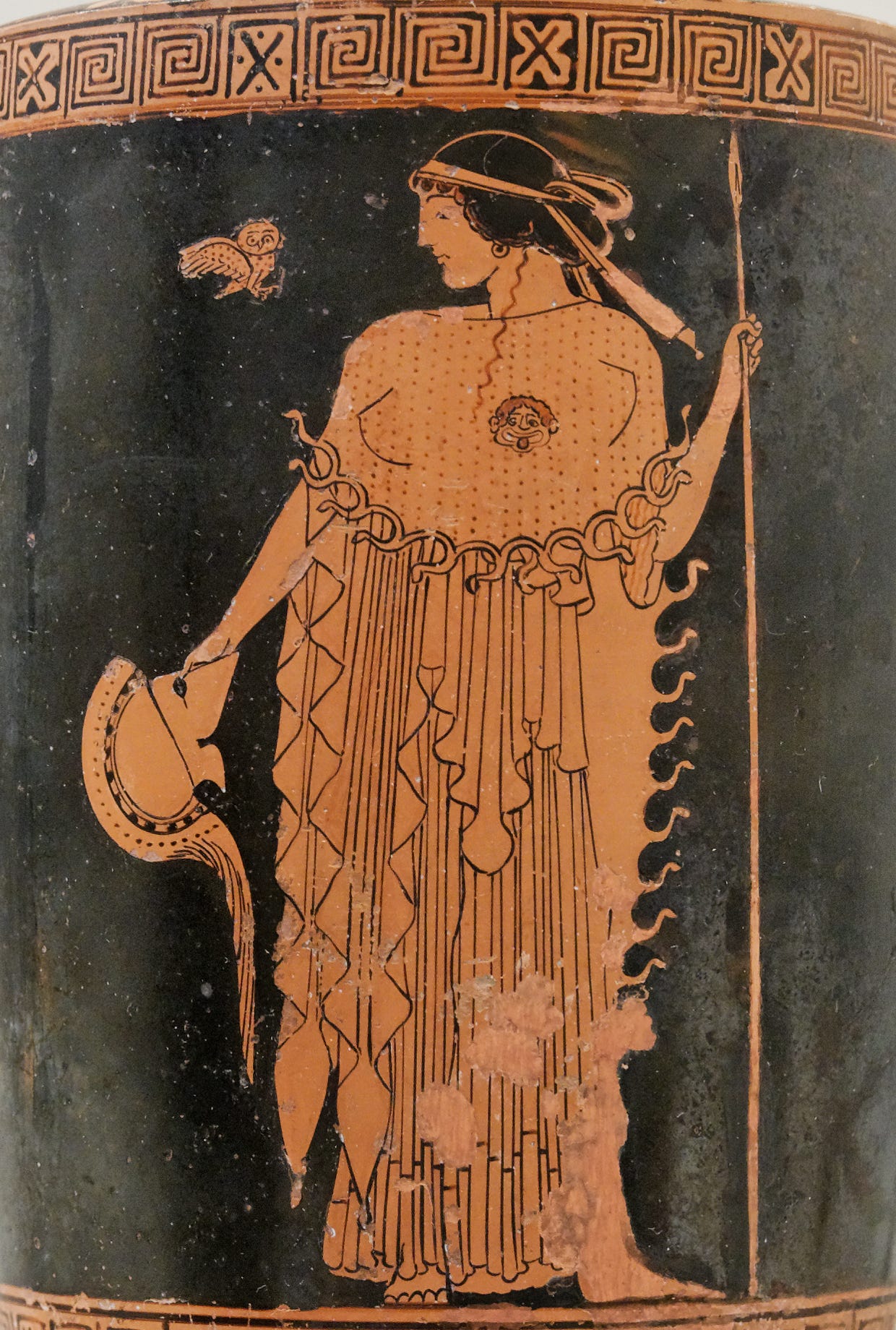
The only Biblical reference to Lilith/lilith is in Isaiah 34, as part of a long poetic prophecy about the land of Edom being utterly destroyed:
For the Lord has a day of vengeance,
a year of retribution, to uphold Zion’s cause.
Edom’s streams will be turned into pitch,
her dust into burning sulfur;
her land will become blazing pitch!
It will not be quenched night or day;
its smoke will rise forever.
From generation to generation it will lie desolate;
no one will ever pass through it again.
…
Desert creatures will meet with hyenas,
and wild goats will bleat to each other;
there the lilith will also lie down
and find for themselves places of rest.-Isaiah 34:8-14
This prophecy has yet to come true. The land of Edom is part of modern day Israel, Palestine, and especially Jordan. People still live there, alongside the desert owls. I’m glad that they do.
One part of Edom, according to Numbers, was inhabited by Midianites during the time of Moses. Afterwards, that region thrived. This was where Raqmu was built, a citadel and oasis carved from stone in the desert. We know it by its Greek name, Petra. Nearby, also in Edom, the same confluence of cultures built a shrine to Moses and a temple of Al-Lat, the Nabataean counterpart to Athena. (They started calling her “Athenallat” at one point.)
When I go looking for truth in the Hebrew Bible, this is where I always end up: in the wilderness, with the owls, building something life-giving out of barren rock. I can’t stand hanging around Isaiah while he fantasizes about nuking the place. I don’t want to come up with some clever way of saying anything positive about the idea of Edom being destroyed. I don’t want to make it a metaphor for something good.
Parathena and All-truism
I’m holding the Torah to an impossible standard here, one that no text in the world can meet. As Amica Terra writes:
Zinger compares the evil of the Bible to his preferred theology: Athena without all the bits he doesn’t like.
…
I do see something of an isolated demand for rigor here: Judaism must defend every verse rather than the impulse that led to the idea of a god above all other feuding gods who created all humanity in one human and who acts always with lovingkindness and whose word is the only true sovereignty and whose command is always justice, but, for Zinger, the pagans can rest on the fact that olive trees are helpful.
Yup. I’m judging the two by completely different standards. It makes sense in my head, but that really might be just me.
For me, yes, rabbinic Judaism has taken on an obligation to defend every verse. Every verse in the Torah is part of a portion you might be assigned to chant during your Bar/Bat Mitzvah ceremony. The number 613 is woven (literally) into Jewish symbolism, representing all 613 commandments in the Torah. One of which is Deuteronomy 7, the injunction to genocide and xenophobia. If we’re throwing out Deuteronomy 7, shouldn’t we cut one of the strings off our prayer shawls to match?
The Hellenic pagan tradition is different. It doesn’t center any particular text. Where Jews create midrashim in the margins of the Torah, pagans just make up their own stories that directly contradict the old ones. When something Homer said gets in the way, or seems bad, pagans throughout history have just said “guess Homer was wrong there.5” Plato’s Republic has an anti-Homer bit, for example, which concludes
For if, my sweet Adeimantus, our youth seriously listen to such unworthy representations of the gods, instead of laughing at them as they ought, hardly will any of them deem that he himself, being but a man, can be dishonored by similar actions; neither will he rebuke any inclination which may arise in his mind to say and do the like.
It’s not that different from Jewish traditions of reinterpretation, but where judaisms are about reinterpreting a text, paganisms are about reinterpreting the world and its spirits directly. When I say that Athena is the god, not simply of technology, but of using technology with intention and care for the greater good, I don’t really feel like I’m blaspheming. Whereas when I side with Korah over Moses, it does feel like I’m doing something transgressive. I don’t feel like I’m allowed to just throw out Numbers 31, so my only choice is to flip it off and call it names.
Amica Terra makes a similar point about double standards with my secular moral philosophy.
One reason I find the shape of Zinger’s aversion to Torah interesting is because Zinger is, I believe, an Effective Altruist. Utilitarianism, though, is famously a moral philosophy that leads to conclusions that look monstrous on their face. Even Effective Altruism, beginning as a tidy incrementalist utilitarianism, has grown strands leading to (fairly persuasive!) arguments that you should donate to shrimp welfare technology instead of homeless shelters. I would assume that neither of us thinks we may just trust our unexamined intuitions on questions of ethics.
I don’t tend to go around calling myself an Effective Altruist or a Hellenic Jewish Neopagan, but that’s only because I don’t think of them as identities, just strains of thought that I like, fragments of ideology. I think it’s a fair cop to call me an Effective Altruist, though—I took the 10% pledge. I feel a surge of perverse pride when I see stuff like this:

Every moral philosophy has implications that run counter to our intuitions on questions of ethics. (Except I guess the one that’s just “always follow your intuition”). So yes, it’s possible that if I studied for long enough, I’d realize that I was wrong and Edom must be destroyed. It’s possible that all of the superficially evil stuff in the Torah is actually divinest sense, to a discerning eye.
But I can’t follow every lead at once. At the start of the quest, intuition is all there is to go on. Utilitarian philosophers say weird things, but they tend to come across like they want what’s best for everyone. The Torah just doesn’t. To me. Your intuition may vary.
I’m still incurably Jewish. I may hate the Torah, with a passion that doesn’t allow for much nuance, but I can’t ignore it without cutting myself off from millennia of thought and culture. I’m fascinated by it, and I’m sure we’ll never stop wrestling.
There are a handful of Humanist Jewish temples I should check out at some point.
Or, of course, using the Bible to justify mass murder. Here’s the captain of an American colonial militia in 1637, feeling troubled after leading a massacre of about four hundred Pequots:
Mercy they did deserve for their valor, could we have had opportunity to have bestowed it. Many were burnt in the Fort, both men, women, and children. Others forced out and came in troops to the Indians twenty and thirty at a time, which our soldiers received and entertained with the point of the sword. Down fell men, women, and children. Those that escaped us fell into the hands of the Indians that were in the rear of us. It is reported by themselves that there were about four hundred souls in this Fort and not above five of them escaped out of our hands. Great and doleful was the bloody sight to the view of young soldiers that never had been in War, to see so many souls lie gasping on the ground so thick in some places that you could hardly pass along.
And here’s how he reconciles himself:
Should not Christians have more mercy and compassion? But I would refer you to David’s war, when a people is grown to such a height of blood and sin against God and man, and all confederates in the action, there he has no respect to persons but harrows them and saws them and puts them to the sword and the most terrible death that may be. Sometimes the Scripture declares women and children must perish with their parents. Sometime the case alters but we will not dispute it now. We had sufficient light from the word of God for our proceedings.
There’s also a preoccupation, in texts ranging from the Talmud to christianthinktank.com, with the question of how the soldiers were supposed to distinguish between virgin and non-virgin female Midianites, so that they could enslave the former and kill the latter. Some rabbis argue that since there’s no practical test, the command must really have been to enslave all the pre-pubescent girls and kill anyone with boobs. Others retort that you can totally tell if someone’s had sex.
Contrast with passages like Deuteronomy 7:
When the Lord your God brings you into the land you are entering to possess and drives out before you many nations…and you have defeated them, then you must destroy them totally. Make no treaty with them, and show them no mercy.
Or Deuteronomy 20, which specifies that you’re only allowed to enslave the women and children in cities outside the Promised Land. In conquered cities inside the Promised Land, says Deuteronomy 20:16, “you shall let nothing that breathes remain alive.”
Not universally, though. The 1st-century writer Heraclitus wrote Homer apologetics where Aphrodite is an allegory for love and so forth.