


1. I’m not your average man
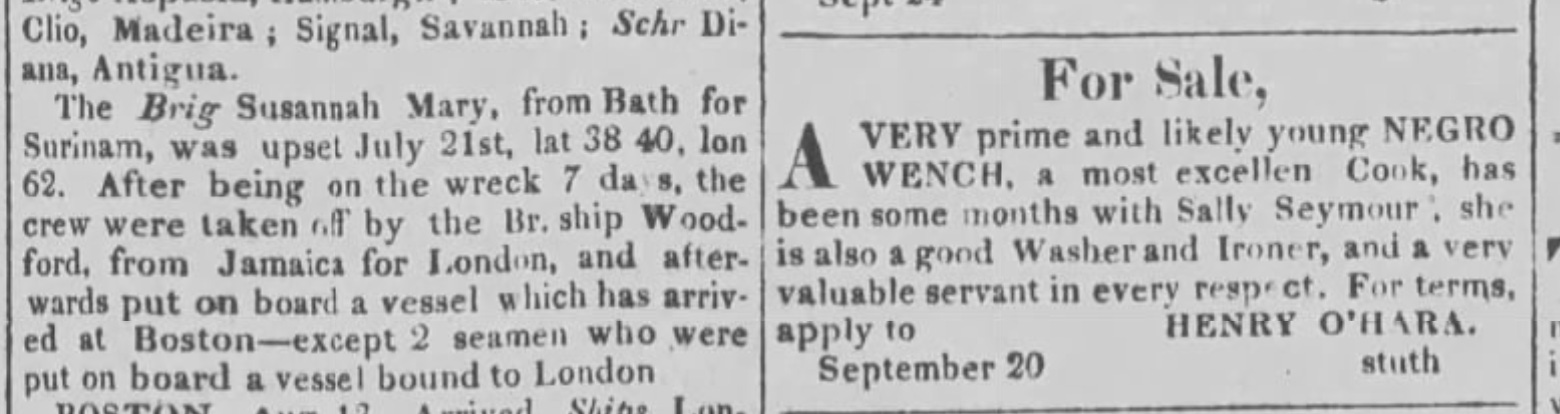
It probably wasn’t Captain Johnson’s fault. Sure, this was his first time captaining the Susannah & Mary, an American merchant brig that had never sunk under his predecessor, Captain Kidder. But this was 1823, when shipwrecks were a near-daily occurrence. The news reports blame a “whirlwind.” In the middle of the Atlantic, sailing from Bath, Maine to Suriname, the ship capsized, and the crew were only able to get her upright again by cutting down the masts, leaving them afloat, but stranded.
The crew were able to salvage most of their food and drinking water. They had no way of knowing how long they would have to stretch those rations before a ship happened to spot them. But they had hope. This was a popular route.
Seven days later, that hope was rewarded. Two British ships, the Percy and the Woodford, found the distressed Susannah & Mary and began the arduous task of rescuing her crew and remaining supplies, one perilous boat trip at a time.
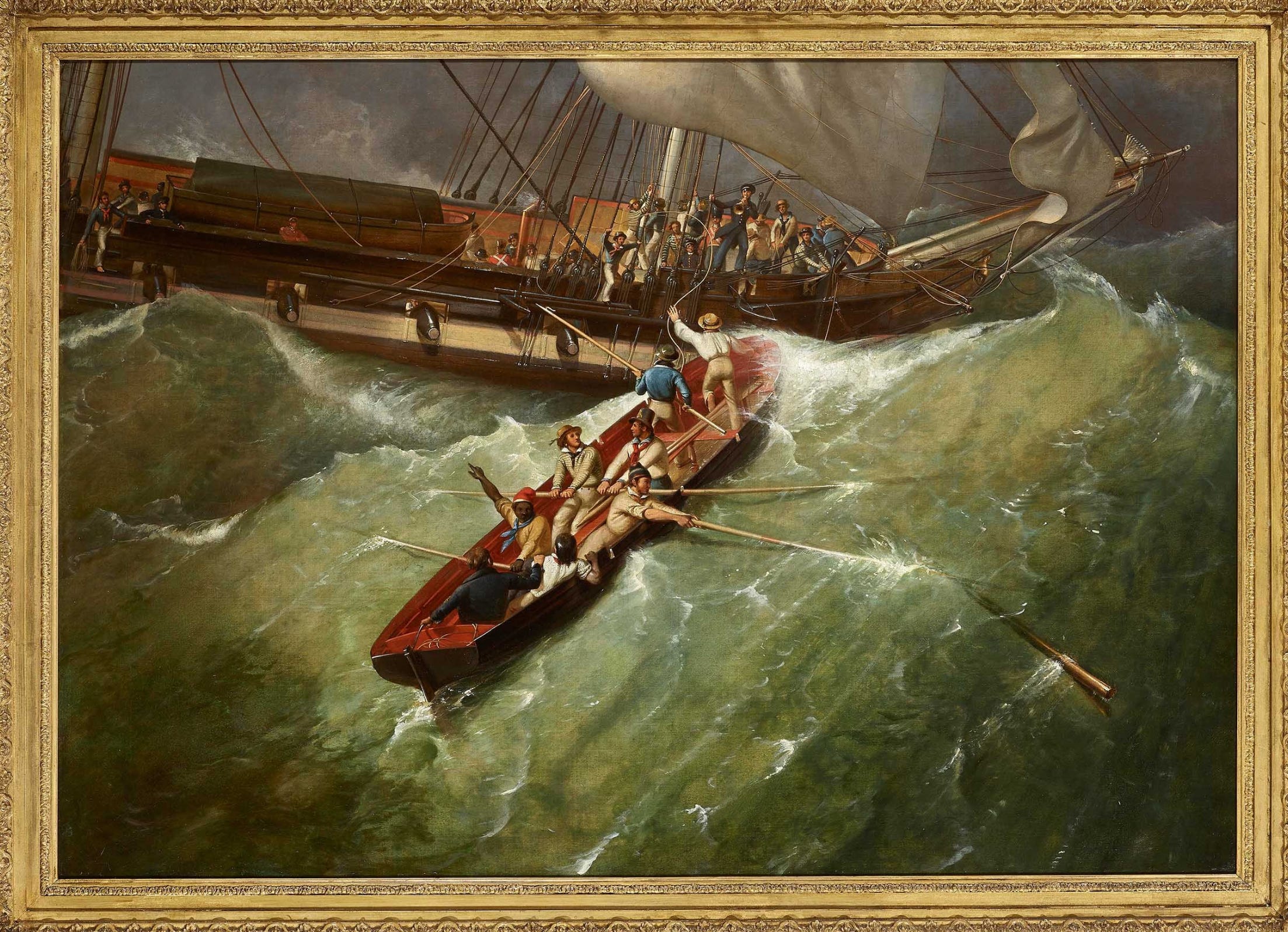
To the American sailors, one of their saviors would’ve stood out from the rest. Not for his dark skin—these were ships under contract with the British East India company, which had crew from all over, including from East India. But this young man, crewman Green of the Woodford, had the accent of a New Yorker and the body of a god. A later report would describe him this way: “a black man, named Green, of large dimensions, exceedingly well proportioned, and evidently superior to the rest.”
For reasons that will become apparent, I believe this exceedingly well proportioned sailor to be a previously-unknown ancestor, something like the great-great-great-great grandfather, of hip hop legend LL Cool J.
No fooling.
2. startin' a hurricane, releasin' pain
By maritime law, Green and his crew were entitled to a reward for their help in salvaging. The “salvor” of a wreck is typically awarded about a quarter of the value saved. And in this case, the owners of the Susannah and Mary had deep pockets. This was one of many ships owned by the Lazarus and Whitmarsh partnership. Whitmarsh was Richmond Whitmarsh, a New York merchant. Lazarus was Aaron Lazarus, of Charleston, South Carolina, one of the first Jewish merchants to succeed in the American South.
Lazarus, in particular, owed people like Green a lot. More than anyone would ever make Lazarus pay. He owned as many as thirty slaves, and all of his wealth was built on slave labor, one way or another. The Susannah & Mary was trading goods made by enslaved Americans for goods made in Suriname, which was effectively a Dutch slave colony. In a few years, two of Lazarus’s warehouse workers would be accused of participating in the Nat Turner rebellion and hanged. Lazarus would collect compensation for this lost property.
For Green, a free Black man, this context had to have been on his mind as he rowed the crew and cargo of the Susannah & Mary to safety. In the home town of the ship’s owner, the news of the rescue would run directly opposite an ad for a slave.
But would Green actually get any money from Lazarus, or Lazarus’s insurance? As the months went by with no word, Green did a bit of research. Asking around in port, he came to the conclusion that he and his crew were entitled to more than £300, the equivalent of about $60,000 in today’s dollars. He asked his captain, Arthur Chapman, a co-owner of the Woodford, to confirm. Chapman replied that if the Woodford ended up getting paid, the crew probably wouldn’t get a share—it would all go to Chapman and his partner.
Green was in the right, but what leverage did he have? That could’ve been the end of it, if not for an accident of timing. In February the following year, the Woodford sailed from Madras (Chennai, India). The Woodford herself had a difficult passage this time, memorialized in paintings by William John Huggins and imitators. She caught the edges of the terrible 1824 hurricane that devastated Mauritius and wrecked over thirty ships.
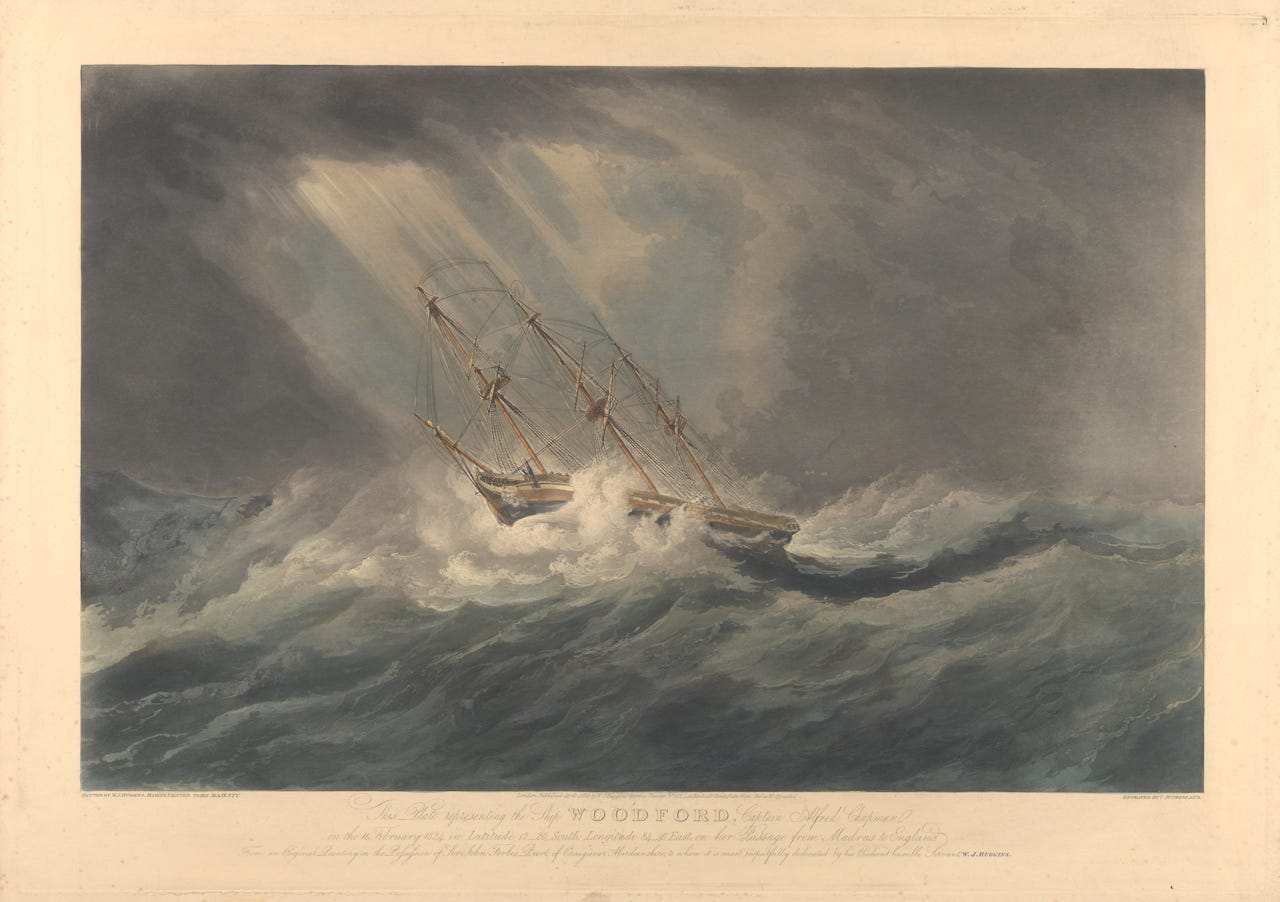
But she arrived safely in London, where Robert Waithman was halfway through his one-year term as Lord Mayor.
3. What made you forget that I was raw?
Robert Waithman was White, and he was quickly becoming notorious as a race traitor. Part of the job of the Lord Mayor of the City of London was to hold public hearings as the Chief Magistrate, and his comments and rulings often provoked outrage for their lack of racism. Conservative newspapers called him “the black Lord Mayor” or “this Calico Lord Mayor” (black and white). Word was getting around—if a Black person needed legal help in dealing with a White person, this was where to go.
These conflicts were getting common. Slavery was illegal in Britain, but legal in British colonies. So a slave who managed to set foot in Britain automatically became free, and in theory had the same rights as any other immigrant. But they still had to contend with people who were used to thinking of them as powerless objects.
So it was pretty savvy of Green to pick Waithman to plead his case to (jurisdiction was messy enough that he had a lot of options), and savvy of his crew to have him be the spokesman of the group. Robert Waithman was their best shot at justice.
Did they get it, though? It’s not clear. In the hearing, Waithman implies that he’s going to have a word with the ship’s owners and persuade them to do the right thing. Since I can’t find a court case about it, or any further coverage, I have to assume things were settled amicably. Neither Green nor Waithman seem like the sort to take “no” for an answer. But all of the news coverage focused not on the actual case but on a bit of banter towards the end.
In the course of the hearing, Green happened to raise a fist to his face, which triggered a moment of recognition from Waithman. Green “exceedingly resembled” Tom Molineux, the American boxer who’d famously gone 35 rounds against English champion Tom Cribb. Waithman had been a spectator at that fight, and asked Green whether he was related. “Your face is akin to his,” Waithman said, “and if I mistake not, your hand is of the same dangerous character.”
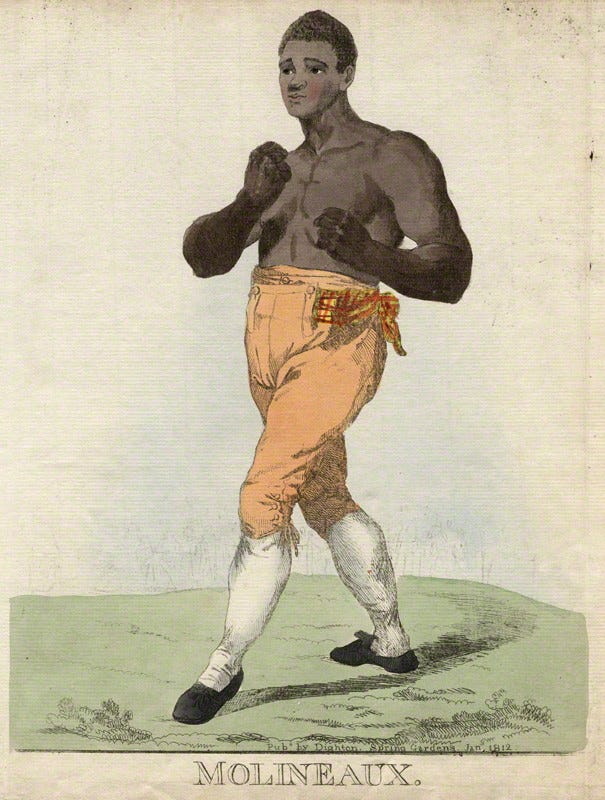
“Indeed, my Lord,” replied Green. “We are sisters’ sons, and I am going to take a trial at the ring myself next week.”
Waithman asked him where he was from, and Green replied that he was “a native of New York.” For some reason, that prompted Waithman to give him some (highly questionable) boxing advice: don’t eat too much beforehand, and eat your beefsteaks raw.
4. I’m gonna rock this land
You know how, when there’s a prominent politician, and they do something unusual, people work really hard to find reasons to get angry about it?
This story was reported by the Times of London, a pro-Waithman paper, without commentary. It was picked up by newspapers nationwide and beyond. It made its way as far as the Charleston Mercury, for example, though they didn’t make the connection to Aaron Lazarus.
In conservative publications, well. Each one found a different angle of attack. The Leeds Intelligencer fumed that he was the “aider, abettor, and encourager” of a sport fit only for “low vagabonds.” A columnist going by “Asmodeus” in the Literary Chronicle instead professed to be furious that Waithman would give advice to a foreigner for defeating an Englishman. Even the abolitionist William Wilberforce, Asmodeus claimed, had cheered for Cribb in his match with Molineux. Others just gave the standard line that Waithman, sitting there in his white wig of office, should have been more dignified.
Oh yeah, and also he really shouldn’t have been telling anyone, let alone a foreigner, to eat British beefsteaks raw. That bit became a touchstone in satires of Waithman.
The British boxing community, known as “the Fancy,” was excited about the news. Molineux was a legend, and surely anybody related to him would be as well. (Molineux himself had died young.) Plus, it gave them an excuse to relitigate that epic match with Cribb—there was a strong argument to be made that Molineux should’ve won if not for bad sportsmanship by Cribb’s team and the referees.
But to all appearances, nothing came of it. For a while, articles on promising Black boxers would include a note that this was “not the relative of Molineux.” But almost no mention of the actual relative. About a decade later, an unrelated boxer named James Wharton dubbed himself “Young Molineux,” suggesting that Green never filled that niche. A few Greens show up in boxing news, but I don’t think any of them are him. My guess is that Green didn’t enjoy his “trial at the ring” and gave the sport up. Or he might have kept boxing in New York, but boxing was illegal there and few records survive.
Or maybe he took the mayor’s advice and missed the bout due to food poisoning.
5. The man of the hour, tower of power
I wish I’d been able to find more about Green. I don’t even have his first name. A satirical poem in John Bull called him “Bill Green,” but I think they just made that first name up to make the sonnet scan. The name “Bill” would’ve come to mind because of Bill Richmond, an England-based Black boxer who was Molineux’s trainer.
So I can’t prove anything. But I’ll present the evidence.
When LL Cool J went on the show Finding Your Roots, he learned that he came from a long line of great boxers on his mother’s side. It was news to him (his mother hadn’t even known she was adopted), but also kind of not, because the two of them were obsessed with boxing. This was decades after his don’t-call-it-a-comeback hit Mama Said Knock You Out, with a music video set in a boxing ring. If ever there was such a thing as a “boxing gene,” this family has it.
DNA testing confirmed that LL Cool J was the biological grandson and grandnephew of boxing brothers Nathaniel Christy Lewis and John Henry Lewis. Finding Your Roots was only able to confidently go back five generations, but according to family lore, the Lewises’s great-uncle was Tom Molineux. Molineux was born into slavery, and there are quite a few different legends about his origins (some of which he probably spread himself), so there’s no reliable record they could use to check this story.
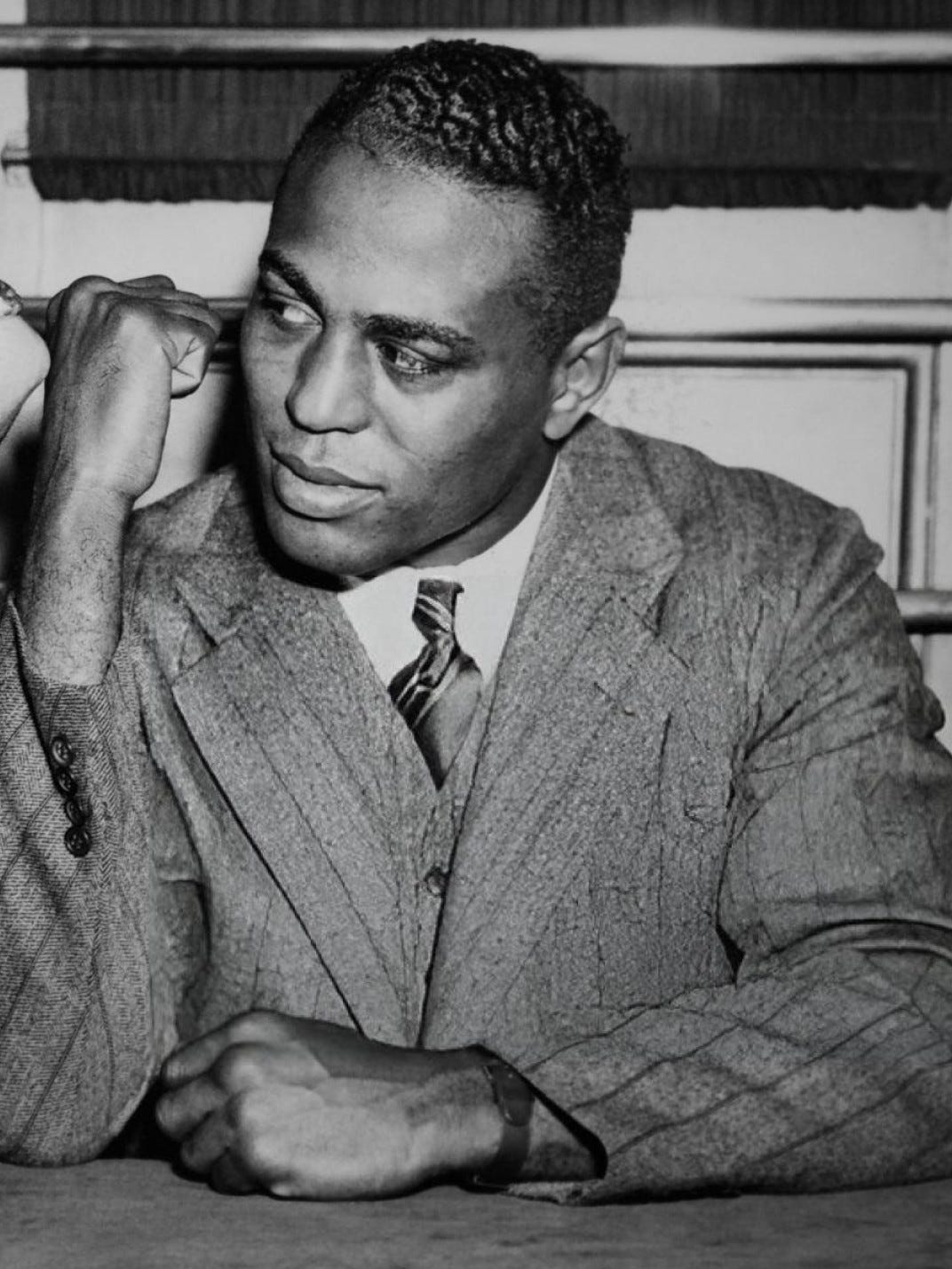
But regardless of whether or not the Lewises were actually related to Molineux, the existence of that family lore demonstrates that they were the descendants of somebody who claimed to be a close relative of his. Molineux himself probably didn’t have children, so this would be someone claiming to be a sibling, or related to a sibling. Green, whose line about “sisters’ sons” implies he was the first cousin of Molineux, is more than plausible as that ancestor. He was visibly a boxer. People looked at him and thought “boxer.” That sure sounds like someone with a boxing bloodline capable of lasting for centuries.

As a Black “native of New York” likely born around 1800, Green has a few different plausible backstories. New York was a slave state, but there were free Black families there too, so he could’ve been born free. Or he could’ve been born to enslaved parents after July 4th, 1799, which under New York’s Act for the Gradual Abolition of Slavery would make him legally an indentured servant until age 28, and then free. Him showing up on a British ship in 1824 would suggest he found some way of speeding up that timeline, legal or otherwise. If his legal status in New York was dicey, he might have moved somewhere else in the U.S., which could explain why the Lewises were based in the West Coast.
6. I need a beat
If it's a malleable beat, subject of discussion
You're motivated with the aid of percussion
There's no category for this story
It will rock in any territory
I syncopate it and design it well
The beat elevates, the scratch excels
All techniques are a combination
Of skills that I have for narration
LL Cool J, I Need A Beat, 1984
I’ve been using Robert Waithman stories as a pick-me-up these past few weeks. “The friend of liberty in evil times,” a plaque on his monument reads. He’s a good guy who won, who made his time a little less evil. He’s a kind of spirit we need to channel right now.
And the bit players in these stories are even more badass. They’re fighting smaller battles, maybe, but against greater odds, in a society that tells them over and over that they’re helpless. That their lives don’t matter. That they have no rights. They’re fighting battles where history doesn’t bother to record the outcome.
But records of their victories still exist, in more tangible form than mere words. A song of glory in the blood of their descendants. A pillar of support for kindred spirits. Generational trauma is real, but so is generational power. Our history is right here with us, fighting at our side.
Green is here. His fist is raised as he speaks. And people are listening.